
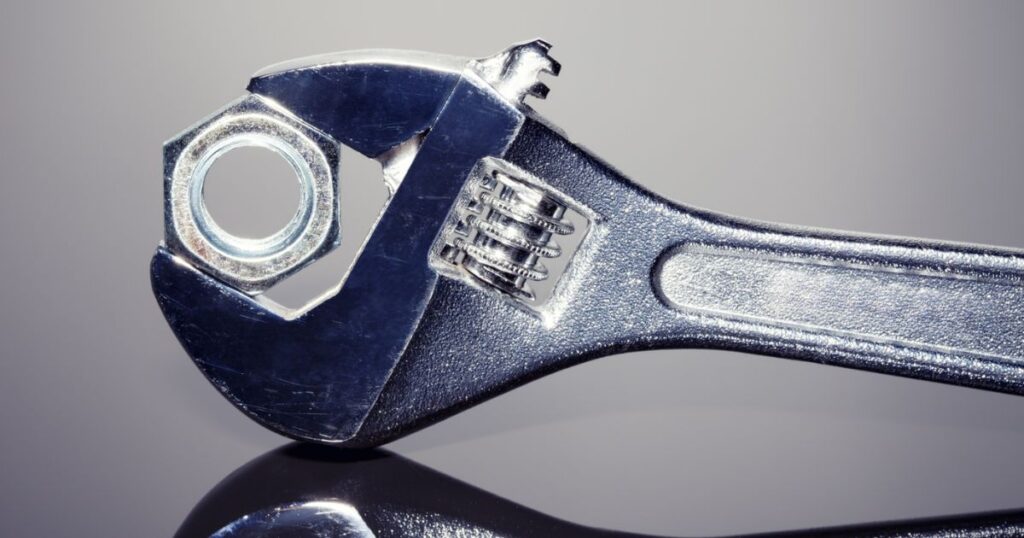
A *wrench surface treatment line turns forged, stamped, or machined wrench blanks into clean, deburred, polished, and rust-protected hand tools. The value of a wrench surface treatment line* is integration: degreasing, deburring, polishing, washing, drying, anti-rust treatment, dust control, and inspection are managed as one repeatable production route instead of separate manual stations.
Table of Contents
- What Is a Wrench Surface Treatment Line?
- Why Wrench Surface Treatment Quality Fails in Production
- Core Process Flow for Wrench Polishing and Surface Finishing
- Key Equipment in a Wrench Surface Treatment Line
- Recommended Parameters and Quality Control Points
- Benefits for Hand Tool Manufacturers
- FAQ
- Conclusion
What Is a Wrench Surface Treatment Line?
A *wrench surface treatment line is a production system for removing burrs, controlling surface roughness, improving appearance, cleaning process residue, and adding corrosion protection before final inspection. It may include a wrench polishing machine*, vibratory finishing equipment, ultrasonic cleaning tanks, hot-air drying, anti-rust treatment, dust extraction, wastewater handling, and PLC recipe control.
For hand tool factories, a *wrench surface treatment line* usually sits after forging, stamping, or machining and before packaging. UBright product-context pages for CNC spanner shank polishing, CNC cheek polishing, and 3D vibratory finishing show why many projects need both dedicated polishing and batch finishing rather than one isolated machine.
Why Wrench Surface Treatment Quality Fails in Production
A weak *wrench surface treatment line* usually fails for four reasons. First, surface quality varies because grinding pressure, abrasive selection, or finishing time is inconsistent. The result may be scratches, pitting, uneven gloss, poor hand feel, or dimensional shift around jaw and torque-contact areas.
Second, rust resistance fails when oil, polishing compound, abrasive dust, or water remains on the surface. For carbon-steel tools, *rust prevention treatment for wrenches* must be planned together with cleaning and drying, not added after defects appear.
Third, disconnected equipment limits capacity. Manual transfer between deburring, polishing, washing, drying, and inspection creates waiting time and makes quality depend on operator habit. Fourth, grinding, buffing, polishing, and deburring can create metal dust. OSHA treats combustible dust as a recognized workplace hazard, so enclosed extraction, housekeeping, and ventilation should be considered in the *wrench surface treatment line* design.
Core Process Flow for Wrench Polishing and Surface Finishing
A practical *wrench surface treatment line* follows this route: incoming blank inspection, degreasing, derusting when required, vibratory deburring, flat polishing, ultrasonic washing, hot-air drying, anti-rust treatment, final inspection, and packaging.
    flowchart LR
    A[Incoming wrench blank inspection] --> B[Degreasing and derusting]
    B --> C[Vibratory deburring and rough finishing]
    C --> D[Flat polishing and bright finishing]
    D --> E[Ultrasonic cleaning and rinsing]
    E --> F[Hot-air drying]
    F --> G[Anti-rust treatment]
    G --> H[Final inspection and packaging]
This flow answers the buyer question *how are wrenches polished in production?* Batch finishing removes burrs and smooths the overall surface, then flat or CNC polishing improves visible faces such as the shank and cheek. Cleaning, drying, and corrosion protection stabilize the result before the wrench reaches packaging.
Key Equipment in a Wrench Surface Treatment Line
Pretreatment and ultrasonic cleaning
Pretreatment removes oil, cutting fluid, rust, and loose oxide before finishing. For oily blanks, ultrasonic degreasing can be configured around 30–60℃ with a 1–5 minute window, then adjusted by trial cleaning. NASA explains that ultrasonic cleaning uses cavitation bubbles to help dislodge contamination from surfaces and recesses, while EPA guidance on aqueous ultrasonic cleaning notes that chemistry, filtration, oil separation, and rinsing affect whether soils are removed or redeposited.
Where rust removal is needed, a controlled spray derusting stage can use pressure in the 0.3–0.5 MPa range. After polishing, ultrasonic cleaning and rinsing remove abrasive dust, oil, and polishing residue so the anti-rust layer contacts a clean surface.
Vibratory finishing for deburring and rough finishing
A *vibratory finishing machine for wrenches* removes burrs, rounds sharp edges, and prepares a uniform base finish before focused polishing. Technical overviews describe vibratory finishing as a mass-finishing method that uses media, compound, water, vibration, and part-to-media movement to deburr, smooth, burnish, or polish metal parts.
One source design uses a 100 L vibratory finishing unit with a lined bowl, variable-frequency drive, and about 180 kg media/part filling capacity. Trial recipes for *vibratory deburring and polishing for wrenches* may start around 5–10 minutes for deburring and 10–15 minutes for rough finishing, then adjust by burr condition, material, media shape, and desired edge radius.
Flat polishing for surface brightness and consistency
Flat polishing improves visible surfaces such as shanks, cheeks, and broad contact areas. A dedicated *spanner polishing machine or automated wrench polishing line* can use abrasive belts, fixtures, pneumatic pressure, and timed passes to reduce operator dependence. A flat polishing station may use a long abrasive belt, adjustable pressure, and short controlled cycles of roughly 2–5 seconds per pass.
For visible surfaces, the polishing stage can be specified toward Ra≤0.8 µm when tooling, belt selection, and pressure are validated. This should be confirmed by roughness testing because steel grade, prior scale, abrasive wear, and fixture stability all affect the final finish.
Drying, rust prevention, and controls
After washing, hot-air drying should remove retained moisture quickly enough to avoid water marks and flash rust. The source design uses about 40–80℃ for 3–10 minutes, depending on part geometry. For carbon-steel tools, a 1–3 minute water-based anti-rust dip or optional wax spray can be added according to storage and use conditions.
A complete *wrench surface treatment line* also needs dust collection, wastewater circulation, noise control, and PLC monitoring. Source design targets include ≥99% dust collection efficiency, ≤80 dB noise control, improved water reuse, and changeovers within 10 minutes after recipes are validated. Final compliance and safety design should be checked against local rules and plant-specific risk assessments.
Recommended Parameters and Quality Control Points
To decide *how to build a wrench polishing line*, start from real samples rather than catalog values alone. Useful starting points include 30–60℃ and 1–5 minutes for degreasing, 5–15 minutes for vibratory finishing, 2–5 second polishing passes, 40–80℃ and 3–10 minutes for drying, and 1–3 minutes for anti-rust immersion.
A stable *wrench surface treatment line* needs inspection before, during, and after processing. Before treatment, check deformation, rust, oil, and burr severity. During treatment, monitor media wear, abrasive belt condition, bath contamination, drying temperature, and visible finish. After treatment, inspect appearance, roughness, rust-prevention coverage, and critical dimensions. Typical targets may include burr removal, uniform appearance, Ra≤0.8 µm where specified, and critical-size control around ±0.02 mm. Anti-rust performance should be validated by storage testing or salt-spray testing before making lifetime claims.
Benefits for Hand Tool Manufacturers
Integrated *wrench surface finishing equipment* helps factories improve repeatability, capacity, and waste control. When degreasing, vibratory finishing, polishing, cleaning, drying, and anti-rust treatment are linked by recipes and inspection points, the final surface depends less on one operator’s polishing skill.
For suitable wrench sizes and fixtures, the source design targets 50–100 pieces per vibratory batch and 300–500 pieces/hour after line balancing. Actual output depends on tool size, finish target, loading method, and inspection standard. Recipe control, belt-wear monitoring, filtration, and lubrication can also reduce rework, media waste, water loss, and unplanned maintenance interruptions. In short, a controlled *wrench deburring and polishing process* is easier to improve than scattered manual operations.
FAQ
What equipment is used for wrench surface treatment?
A typical *wrench surface treatment line* uses degreasing or derusting equipment, a vibratory finishing machine, a wrench polishing machine, ultrasonic cleaning and rinsing tanks, hot-air drying, anti-rust treatment, dust collection, wastewater handling, PLC controls, and inspection tools such as roughness testers and gauges.
How are wrenches polished in mass production?
Wrenches are usually polished in stages. Vibratory finishing removes burrs and smooths edges in batches, while flat or CNC polishing improves visible areas such as the shank and cheek. This staged *wrench surface finishing process for hand tool manufacturing* is then followed by cleaning, drying, anti-rust treatment, and inspection.
When should a factory choose a full line instead of standalone polishing machines?
Choose a full *wrench surface treatment line* when the factory has repeated finish variation, high manual transfer time, rust complaints, dust or wastewater pressure, or frequent size changes. A standalone polishing machine is usually enough only when upstream deburring, cleaning, drying, and inspection are already stable.
How can a wrench polishing line improve rust resistance after polishing?
The answer to *how to improve wrench rust resistance after polishing* is to control residue and moisture before anti-rust treatment. Cleaning, rinsing, drying, and a verified anti-rust dip or wax process help the protective layer contact a clean, dry metal surface.
Conclusion
A *wrench surface treatment line connects deburring, polishing, cleaning, drying, rust prevention, safety control, and inspection into one repeatable hand tool manufacturing process. For factories planning new wrench surface finishing equipment*, the best next step is to define wrench type, size range, finish target, rust-resistance requirement, and expected capacity, then validate media, abrasive belt, cleaning chemistry, and inspection standards with real samples.
If you are planning a hand tool finishing project, UBright can review your wrench drawings, surface requirements, production rhythm, and inspection targets, then help configure a suitable *wrench surface treatment line* before equipment selection.
References
- UBright Solutions CNC Shank Polishing Machine — Supports UBright product-context references for spanner shank polishing equipment.
- UBright Solutions CNC Cheek Polishing Machine — Supports UBright product-context references for spanner cheek polishing equipment.
- UBright Solutions 3D Vibratory Finishing Machine — Supports UBright product-context references for vibratory finishing of hand tools.
- NASA Technical Reports Server: Ultrasonic Cleaning Fundamental Theory and Application — Supports the explanation of ultrasonic cavitation and industrial cleaning mechanisms.
- US EPA Archive: Finding an Alternative to Solvent Degreasing — Supports ultrasonic aqueous cleaning process considerations for metal degreasing.
- ScienceDirect Topics: Vibratory Finishing — Supports the definition and process role of vibratory finishing.
- OSHA Combustible Dust Standards — Supports the need to assess and control combustible dust hazards in grinding, polishing, and deburring environments.